
Lab-Grown Diamond Guide
What is HPHT Diamond? Understanding the Lab-Grown Diamond Production Method
HPHT diamonds are real diamonds grown in a lab using the High Pressure High Temperature method. Learn how this production technique mimics nature to create…
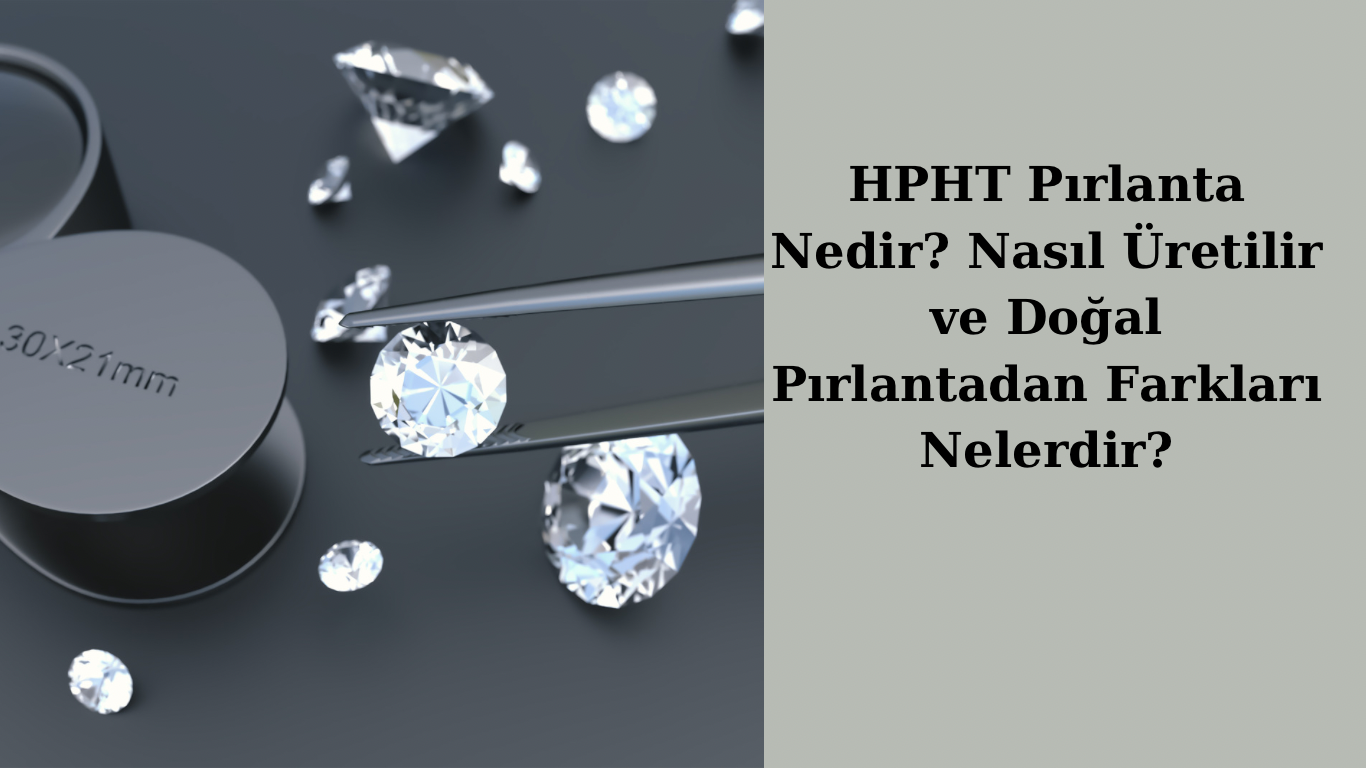
HPHT diamond stands for a real diamond grown in a laboratory environment using the "High Pressure High Temperature" method. In English, this term translates to "high pressure and high temperature."
The HPHT method mimics the conditions found deep within the Earth's crust where natural diamonds form. During this process, carbon transforms into a crystalline structure, gaining the form of a diamond.
Is HPHT Diamond a Real Diamond?
Yes. An HPHT diamond is a real diamond. It should not be confused with imitations like glass, zircon, crystal, or moissanite. Diamonds produced using the HPHT method also possess a carbon-based crystalline structure, just like natural diamonds.
Therefore, the appearance, brilliance, and diamond effect offered by an HPHT diamond in jewelry carry the character of a real diamond. The difference lies not in the diamond's appearance, but in its formation process.
What Does HPHT Stand For?
HPHT is the abbreviation for the English phrase "High Pressure High Temperature." This method creates the high pressure and high temperature conditions required for carbon to turn into a diamond crystal within a laboratory setting.
While natural diamonds form deep underground over millions of years, the HPHT method realizes this formation logic using controlled technology in a much shorter time.
How is HPHT Diamond Produced?
In HPHT production, a carbon source is subjected to extremely high pressure and temperature inside special machines. This environment creates a structure similar to the underground conditions where natural diamonds form.
Under these conditions, carbon atoms gain a crystalline form, and a diamond structure is formed. The resulting rough crystal is then cut, shaped, and polished. This results in a brilliant and elegant diamond suitable for use in jewelry.
HPHT vs. CVD Diamond: What’s the Difference?
The two most well-known methods for producing lab-grown diamonds are HPHT and CVD. Both methods produce real diamonds; however, the process of growing the diamond differs.
| Feature | HPHT Diamond | CVD Diamond | |--- | --- | --- | | Method | Growth using high pressure and high temperature | Layer-by-layer growth using carbon gas | | Production Logic | Mimics natural diamond formation conditions | Facilitates the growth of carbon atoms on a diamond seed | | Result | Real lab-grown diamond | Real lab-grown diamond | | Appearance | Offers diamond brilliance | Offers diamond brilliance |
Both HPHT and CVD methods are used in lab-grown diamond production. When making a choice, one should not focus solely on the production method; attention should also be paid to the diamond's carat, color, clarity, cut, and certificate.
To get general information about lab-grown diamonds, you can review the lab-grown diamond guide.
Is There a Visual Difference Between HPHT and Natural Diamonds?
There is no visible difference between an HPHT diamond and a natural diamond that can be seen with the naked eye. A well-cut and properly polished HPHT diamond offers the strong brilliance characteristic of natural diamonds on the jewelry piece.
The main factors that determine a diamond's appearance are cut quality, color, clarity, carat, symmetry, and polish values. Therefore, the most important aspect when choosing an HPHT diamond is selecting it with the correct quality criteria.
Advantages of HPHT Diamonds
HPHT diamonds combine the real diamond structure with modern laboratory technology. They stand out with their accessible luxury approach, high-quality options, and ethical production philosophy.
- **Real diamond structure:** An HPHT diamond is a real diamond based on carbon.
- **Modern production:** Natural diamond formation conditions are mimicked using technology.
- **Accessible luxury:** It provides access to larger carat options with a similar appearance.
- **Ethical choice:** It can be produced without requiring a mining process.
- **Jewelry compatibility:** It can be used in solitaire rings, necklaces, earrings, bracelets, and custom designs.
What to Consider When Buying an HPHT Diamond?
When choosing an HPHT diamond, focusing only on the production method is not enough. There are many quality criteria that determine the diamond's effect on the jewelry.
- **Carat:** Determines the perception of the diamond's size.
- **Color:** Colors like D, E, and F offer a whiter and brighter appearance.
- **Clarity:** Indicates the visibility of inclusions within the diamond's internal structure.
- **Cut:** One of the most important criteria that determines how the diamond reflects light.
- **Certificate:** Ensures the diamond's characteristics are documented reliably.
- **Design compatibility:** The setting, claw structure, and gold color affect the diamond's appearance.
Where Are HPHT Diamonds Used?
Once HPHT diamonds reach jewelry quality, they can be used in many designs. Solitaire rings, engagement rings, five-stone models, necklaces, earrings, and bracelets are the main jewelry groups where HPHT diamonds can be used.
In the X Diamond collections, lab-grown diamonds are adapted to modern designs with different cuts such as round, oval, pear, emerald, radiant, marquise, and baguette. In particular, lab-grown diamond rings combine a strong design language with the new generation diamond philosophy.
Should HPHT Diamonds Be Certified?
Yes. A certificate is an important source of trust when buying an HPHT diamond. The certificate shows the diamond's carat, color, clarity, cut, and origin information.
Especially international laboratory reports like IGI allow you to see the diamond's lab origin and quality values transparently. Choosing a certified diamond helps make more informed decisions, especially for high-carat models.
Does HPHT Diamond Tarnish?
An HPHT diamond does not tarnish with correct use and regular maintenance because its structure is a real diamond. However, like any diamond in jewelry, soap, cream, perfume, and daily use residues can accumulate on the diamond's surface, temporarily reducing its brilliance.
Therefore, regular cleaning of HPHT diamond jewelry helps preserve its sparkle. Harsh chemicals that could damage the diamond should be avoided during cleaning.
X Diamond’s Approach to HPHT Diamonds
For X Diamond, HPHT diamond is not just a production method; it is part of a modern jewelry philosophy. It is important not only the technical specifications of the diamond but also the balance it creates with the design, its stance on the setting, and the effect it creates.
In every piece of jewelry, the diamond's sparkle, cut shape, claw structure, gold color, and proportion balance are evaluated together. In this way, a lab-grown diamond becomes not just an accessible option, but a strong and elegant jewelry experience.
Conclusion: HPHT Diamonds Are a Real Lab-Grown Diamond
An HPHT diamond is a real diamond grown in a laboratory environment using high pressure and high temperature conditions. The difference from a natural diamond lies not in its appearance, but in its formation process.
The HPHT method, which combines the real diamond brilliance with modern technology, holds an important place in the world of lab-grown diamonds. When chosen with the correct quality criteria, an HPHT diamond is a strong alternative for elegant and impressive jewelry.
Frequently Asked Questions
Is an HPHT diamond a real diamond?
Yes. An HPHT diamond is a real diamond. It has a carbon-based crystalline structure and differs from imitation stones like glass, zircon, or moissanite.
What is the HPHT acronym?
HPHT is the abbreviation for High Pressure High Temperature. In English, it means high pressure and high temperature.
How is an HPHT diamond produced?
An HPHT diamond is produced by carbon transforming into a crystalline structure under high pressure and high temperature conditions. This method mimics the underground conditions where natural diamonds form in a laboratory setting.
What is the difference between an HPHT diamond and a CVD diamond?
The HPHT method is based on a growth process using high pressure and high temperature. The CVD method facilitates the layer-by-layer growth of carbon gases on a diamond seed. Real lab-grown diamonds can be produced with both methods.
Can an HPHT diamond be distinguished from a natural diamond?
It is not possible to distinguish an HPHT diamond from a natural diamond with the naked eye. The distinction is made using special laboratory equipment and certificate information.
Does an HPHT diamond tarnish?
An HPHT diamond does not tarnish with correct use and regular maintenance. However, residues such as cream, soap, perfume, and daily accumulation on the surface can temporarily reduce the diamond's brilliance.
Can an HPHT diamond be used in a solitaire ring?
Yes. HPHT diamonds can be used in solitaire rings, necklaces, earrings, bracelets, and various other lab-grown diamond jewelry pieces.