Lab-Grown Diamond Guide
What Are Diamond Clarity Grades?
Diamond clarity refers to the visibility of natural internal inclusions and surface characteristics. While a key factor, clarity should be evaluated…
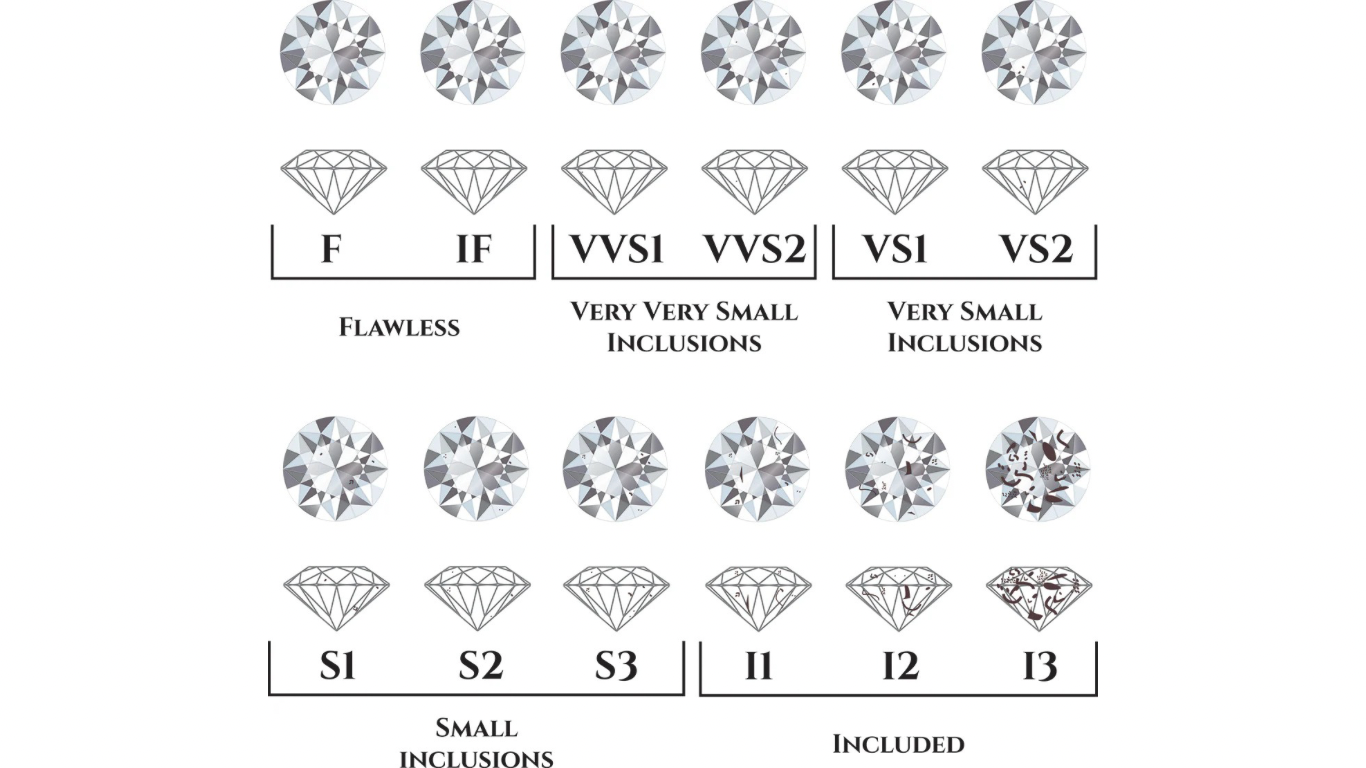
Diamond clarity refers to the visibility of natural internal inclusions and surface characteristics within the diamond's structure. These inclusions are a result of the diamond's formation process and are often invisible to the naked eye.
Clarity is an important criterion in diamond selection; however, it should not be evaluated in isolation. It should be considered alongside carat, color, cut, certification, and jewelry design. The best choice is not the highest value on paper, but a diamond that looks clean, brilliant, and complements the design.
What Does Diamond Clarity Mean?
Diamond clarity describes the intensity, size, location, and visibility of inclusions found inside or on the surface of the stone. These inclusions are classified into specific degrees using international evaluation systems.
As the clarity grade increases, the internal and external inclusions of the diamond become less visible. However, a high clarity grade does not necessarily mean it is the correct choice for every user, as how the diamond appears to the naked eye is also very important.
What Are Diamond Clarity Grades?
Diamond clarity is usually expressed in grades such as FL, IF, VVS, VS, SI, and I. These grades are determined by examining the diamond under magnification.
| Clarity Grade | Meaning | General Appearance | | :--- | :--- | :--- | | FL | Flawless | The highest level of clarity with no internal or external inclusions visible under magnification. | | IF | Internally Flawless | No internal inclusions; a very high level of clarity. | | VVS1 - VVS2 | Very Very Slightly Included | Inclusions are very difficult to see, even under magnification; offers top-tier clarity. | | VS1 - VS2 | Very Slightly Included | Often appear clean to the naked eye. | | SI1 - SI2 | Slightly Included | Inclusions are more visible under magnification; may be visible to the naked eye depending on the stone. | | I1 - I2 - I3 | Included | Inclusions are visible to the naked eye and can affect brilliance. |
What is FL Clarity?
FL stands for "Flawless" and represents the highest level on the diamond clarity scale. In this grade, no internal or external inclusions are visible under magnification.
FL clarity is extremely rare. However, it is not always a mandatory choice for daily use. Many diamonds with lower clarity grades can also appear extremely clean and impressive to the naked eye.
What is IF Clarity?
IF stands for "Internally Flawless." In this clarity grade, no inclusions are found inside the diamond; only very small surface characteristics may exist.
IF clarity is a strong option for users seeking a high-quality perception. In particular, the combination of D color and IF clarity in lab-grown diamonds can offer a very clean and premium look.
What is VVS Clarity?
VVS stands for "Very Very Slightly Included." It is divided into VVS1 and VVS2. In diamonds of this grade, inclusions are so difficult to see that they are almost impossible to detect even under magnification.
VVS clarity is a strong preference for those seeking high quality but looking for a very clean appearance without reaching FL or IF levels. VVS clarity often emerges as a more prestigious option for larger carat diamonds.
What is VS Clarity?
VS stands for "Very Slightly Included" and is divided into two levels: VS1 and VS2. In diamonds of this grade, inclusions are visible under magnification; however, they are often not noticeable to the naked eye.
VS clarity is one of the most balanced options in diamond selection. It generally offers a clean appearance to the naked eye and provides a strong balance between budget and quality.
What is SI Clarity?
SI stands for "Slightly Included" and is evaluated as SI1 and SI2. At this clarity level, inclusions are more visible under magnification, and in some diamonds, they may be visible to the naked eye.
If choosing SI clarity, the diamond must be carefully evaluated to ensure it looks clean to the naked eye. The location, size of the inclusions, and the diamond's cut shape can directly affect the appearance.
What is I Clarity?
I stands for "Included." At this level, inclusions are visible to the naked eye, and in some cases, they can affect the diamond's brilliance, durability, or overall appearance.
Therefore, if a strong and clean diamond appearance is targeted for jewelry quality, I clarity levels should be carefully evaluated.
Which is the Best Diamond Clarity?
The best diamond clarity depends on expectations and budget. While FL or IF may be the highest clarity levels on paper, VS or VVS levels that appear clean to the naked eye can be very strong choices for daily use.
Especially in lab-grown diamonds, achieving higher clarity levels can be more accessible. Therefore, IF, VVS, and VS options are frequently evaluated in lab-grown diamond selections.
What Does an Eye-Clean Diamond Mean?
An "eye-clean" diamond refers to a stone that does not have obvious internal inclusions visible to the naked eye. This is very important for the user experience, independent of the clarity grade on the certificate.
For example, a well-selected VS2 diamond can appear extremely clean to the naked eye. Conversely, in some SI diamonds, if inclusions are located in the center, they may be easier to notice.
Does Clarity Affect Diamond Brilliance?
Clarity can affect the appearance of the diamond, but it is not the only criterion determining brilliance. One of the most influential factors on how light interacts with the diamond is cut quality.
In very low clarity levels, dense or large inclusions can negatively affect the movement of light inside the diamond. However, at eye-clean levels, the diamond's sparkle is more related to cut, symmetry, and polish quality.
Is Clarity More Important as Carat Increases?
Yes. As the diamond size increases, internal inclusions can become more visible. Therefore, for diamonds of 1.50 ct, 2.00 ct and above, clarity selection should be made more carefully.
In larger carat diamonds, clarity levels like VS, VVS, or IF can offer a stronger appearance. Especially in cuts with large open surfaces, clarity can become more pronounced.
Does Cut Shape Affect Clarity?
The cut shape can affect how clarity is perceived to the naked eye. Some diamond cuts show internal inclusions more easily, while others can hide them better thanks to their sparkling structure.
- **Round Cut:** Can hide small inclusions better due to its intense sparkle.
- **Oval Cut:** Offers a brilliant appearance; however, inclusions in the center area should be examined carefully.
- **Emerald Cut:** Due to its wide and stepped surfaces, clarity can be more visible.
- **Baguette Cut:** Due to its clean surface structure, internal inclusions can be shown more easily.
- **Radiant Cut:** Can mask inclusions better thanks to its lively sparkle.
You can check the Fancy Cut Diamond Rings category to examine different cut options.
How to Choose Clarity in Lab-Grown Diamonds?
When choosing clarity for a lab-grown diamond, the diamond's carat, cut, color, and certificate should be evaluated together. Lab-grown diamonds can make higher clarity options more accessible due to their affordable price advantage.
Combinations like D color, IF clarity, or VVS clarity are strong options for users seeking a premium look. However, the highest clarity is not always mandatory; a diamond that looks clean and is well-cut can also be extremely impressive.
You can review the What is a Lab-Grown Diamond guide for detailed information about lab-grown diamonds.
How to Read Clarity on a Diamond Certificate?
On a diamond certificate, the clarity grade is usually indicated with abbreviations such as FL, IF, VVS1, VVS2, VS1, VS2, SI1, SI2. This grade is given based on the examination of the diamond under magnification.
The certificate ensures you can view the clarity information reliably. However, when choosing a diamond, in addition to the clarity grade on the certificate, the actual appearance of the stone, its cut, and its compatibility with the design should also be evaluated.
You can review the What is an International Diamond Certificate guide for more information on certificates.
Is Clarity or Color More Important?
Clarity and color should be evaluated together. While color affects the perception of whiteness, clarity expresses the internal cleanliness of the stone. Which criterion is more important depends on the diamond's carat, cut, and the user's expectations.
For example, in a white gold solitaire, a higher color grade may be more pronounced. In cuts like Emerald or Baguette with clean surfaces, clarity may become more important.
Is Clarity or Cut More Important?
Cut is one of the most influential criteria on the diamond's brilliance. Therefore, it should not be assumed that a diamond with high clarity will have the best appearance.
A diamond with eye-clean clarity and good cut can appear more lively and impressive than a diamond with very high clarity but poor cut.
X Diamond's Clarity Approach
At X Diamond, diamond selection is not made solely based on clarity grade. Carat, color, cut, certification, setting structure, and the way the jewelry sits in the hand are all evaluated together.
The goal is to provide a diamond experience that is technically reliable and visually strong. Therefore, the actual effect of the diamond on the jewelry is as important as the values on paper.
You can check the Lab-Grown Diamond Rings category to view lab-grown diamond ring models.
Conclusion: The Best Clarity is the One That Looks Clean and Balanced
Diamond clarity is an important quality criterion in the selection process. FL and IF stand out as the highest clarity levels, while VVS and VS grades offer very clean and strong options for most users.
The best clarity selection is not the one with the highest degree, but the one that appears most balanced in terms of the diamond's carat, cut, color, certification, and design.
Frequently Asked Questions
What is diamond clarity?
Diamond clarity is a quality criterion that shows how visible internal and external inclusions of the stone are.
What is the best diamond clarity?
FL and IF are the highest clarity levels. However, for daily use, options like VVS and VS that appear clean to the naked eye can also be very strong choices.
What does IF clarity mean?
IF stands for Internally Flawless. It indicates that no inclusions are found inside the diamond that can be seen under magnification.
What does VVS clarity mean?
VVS stands for Very Very Slightly Included. It is a high clarity level where inclusions are very difficult to detect even under magnification.
Is VS clarity good?
Yes. VS clarity can offer a clean appearance to the naked eye in most diamonds and is a strong option in terms of quality-price balance.
Should I buy SI clarity?
If choosing SI clarity, the diamond must be carefully examined. While some SI diamonds may appear clean to the naked eye, in others, inclusions may be visible to the naked eye.
Does clarity affect diamond brilliance?
Very low clarity levels can affect brilliance. However, in the diamond's light performance, cut quality is usually a more determining factor.
Which clarity should be chosen for a lab-grown diamond?
IF, VVS, and VS clarity levels are strong options for lab-grown diamonds. The best choice should be made with a balance of carat, color, cut, and budget.
VVS, VS and SI Short Comparison Table
| Clarity Group | General Appearance at 10x Magnification | Purchase Comment | | :--- | :--- | :--- | | VVS1-VVS2 | Very difficult for experienced eyes to find internal characteristics | Very high clarity; the difference is mostly related to magnification. | | VS1-VS2 | Small internal characteristics can be seen | Many stones appear clean to the naked eye and offer a balanced value. | | SI1-SI2 | Internal characteristics are easier to select | The stone's size, shape, and the location of the characteristic must be examined individually. |
VS or SI Which Should Be Chosen?
Instead of just looking at the letter, check if the stone looks clean to the naked eye, where the inclusion is located (center vs. edge), and if it reaches the surface. Two diamonds with the same clarity grade can look different.
Does Clarity Affect Durability?
Most small internal characteristics are only related to appearance and grade. However, characteristics that reach the surface, are near sharp edges, or resemble large cracks should be evaluated separately for durability.